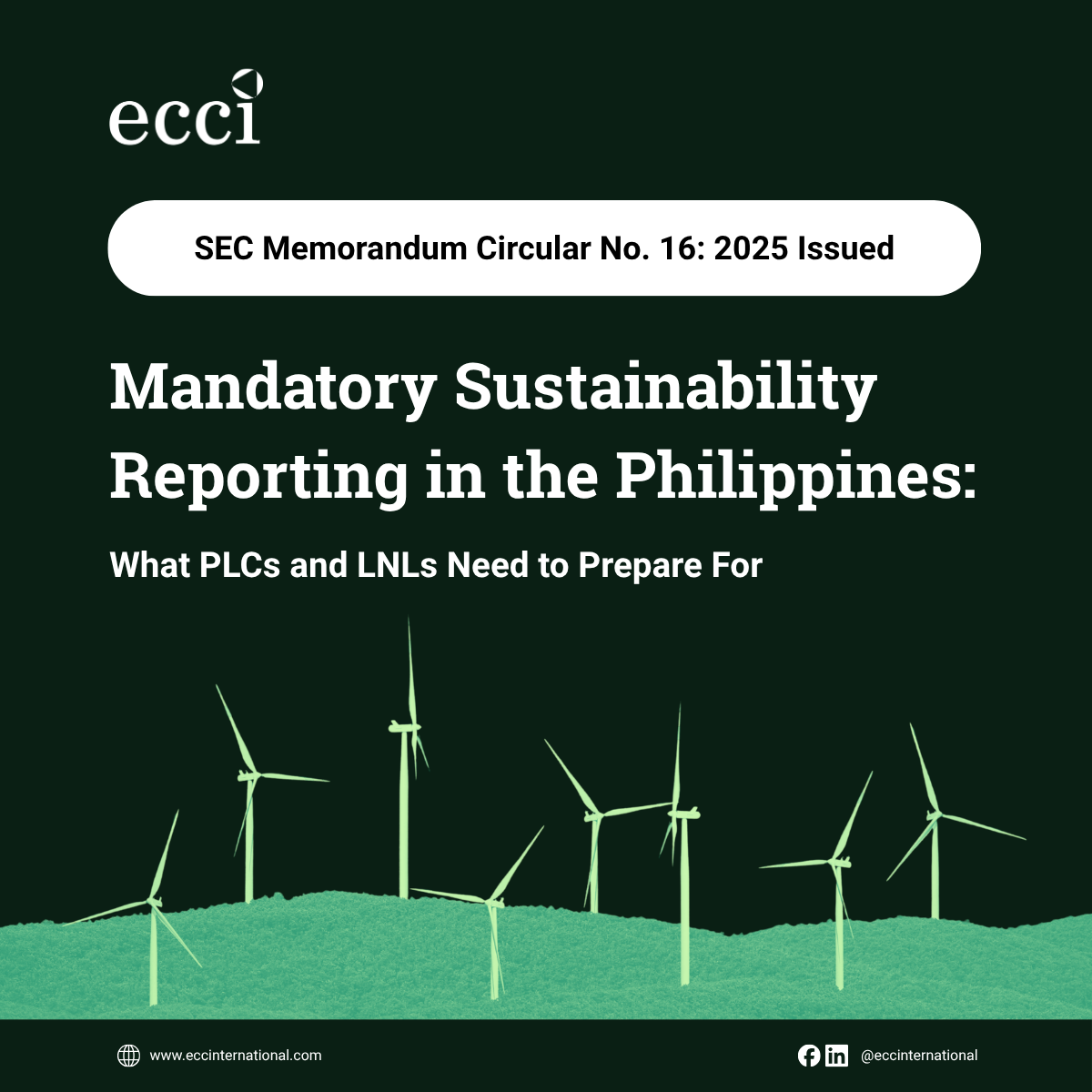
For Philippine companies, fulfilling SEC mandates like filing General Information Sheets (GIS), Audited Financial Statements (AFS), and preparing for mandatory sustainability reporting (on the near horizon) is just the baseline. The real opportunity lies in transforming these disclosures into levers for growth, governance, and enduring trust.
Forward-thinking organizations realize that compliance isn’t merely about avoiding penalties—it’s about extracting insights, improving operations, strengthening governance, and building reputation. By going beyond minimum legal requirements, companies can convert regulatory obligations into competitive advantages.
The Risk of “Check-the-Box” Compliance
Companies that treat compliance as only a procedural or defensive function often miss important value, and face risks such as:
- Missed strategic insights: Data from GIS, AFS, and sustainability metrics can reveal trends—cost escalations, frequent governance failures, or ESG exposure—but only if someone analyzes them, not merely files them.
- Exposure to hidden risks: Poor governance, climate risks, regulatory changes, or social issues may go unnoticed until they become crises (financial, regulatory, reputational).
- Reputation damage: In an age of transparency, lapses in compliance or weak disclosures are likely to be publicized, affecting stakeholder trust (investors, customers, communities).
- Competitive disadvantage: Firms proactive in ESG reporting and governance tend to attract better investment, talent, and partnership opportunities. Falling behind means losing out.
Doing the bare minimum satisfies legal obligations—but does little to build resilience or shape long-term value.
Turning Compliance into Action
Here are practical ways that companies can advance from purely meeting requirements to using compliance as a driver for improvement and advantage:
| Action | What to Do | Value Gained |
| Analyze the Data | Regularly review filings (GIS, AFS, internal ESG data) to detect patterns—financial anomalies, governance gaps, ESG trends. Use dashboards or metrics. | Early detection of operational inefficiencies; better forecasting; risk mitigation. |
| Set Improvement Goals | Define KPIs tied to compliance outputs. For example: reduce the number of qualified audit issues; achieve zero late filings; decrease emissions by X%; improve governance diversity. | Creates accountability; shows progress; aligns compliance with overall strategy. |
| Integrate Compliance into Strategy | Empower teams across finance, operations, sustainability, HR to use reportorial data in strategic planning. Place compliance outcomes on board agendas. | Better strategic alignment; more informed decisions; stronger governance culture. |
| Automate and Monitor | Leverage compliance software, digital tools (SECs e-FAST tool, digital dashboards) to gather, validate, track, and report data. Enable real-time or periodic review. | Reduced manual errors; more timely filings; less risk of penalties; resource savings. |
Benefits of Going Beyond Compliance
When a company does more than simply satisfy the rules, it can generate several tangible benefits:
- Investor & Stakeholder Confidence – Transparent, trustworthy disclosures (especially ESG-metrics) help attract investors who increasingly demand non-financial data.
- Operational Efficiency – Staying ahead of deadlines, systematizing reporting reduces last-minute scramble, errors, and costs.
- Reputation & Trust – Demonstrates accountability to employees, customers, communities, and regulators; still matters especially in ESG-aware markets.
- Competitive Advantage – Companies that proactively manage ESG, show strong governance credentials, and embrace sustainability are more likely to win business, retain talent, and access favorable financing.
Practical First Steps
If you’re guiding your company from compliance only to action, here are concrete first steps:
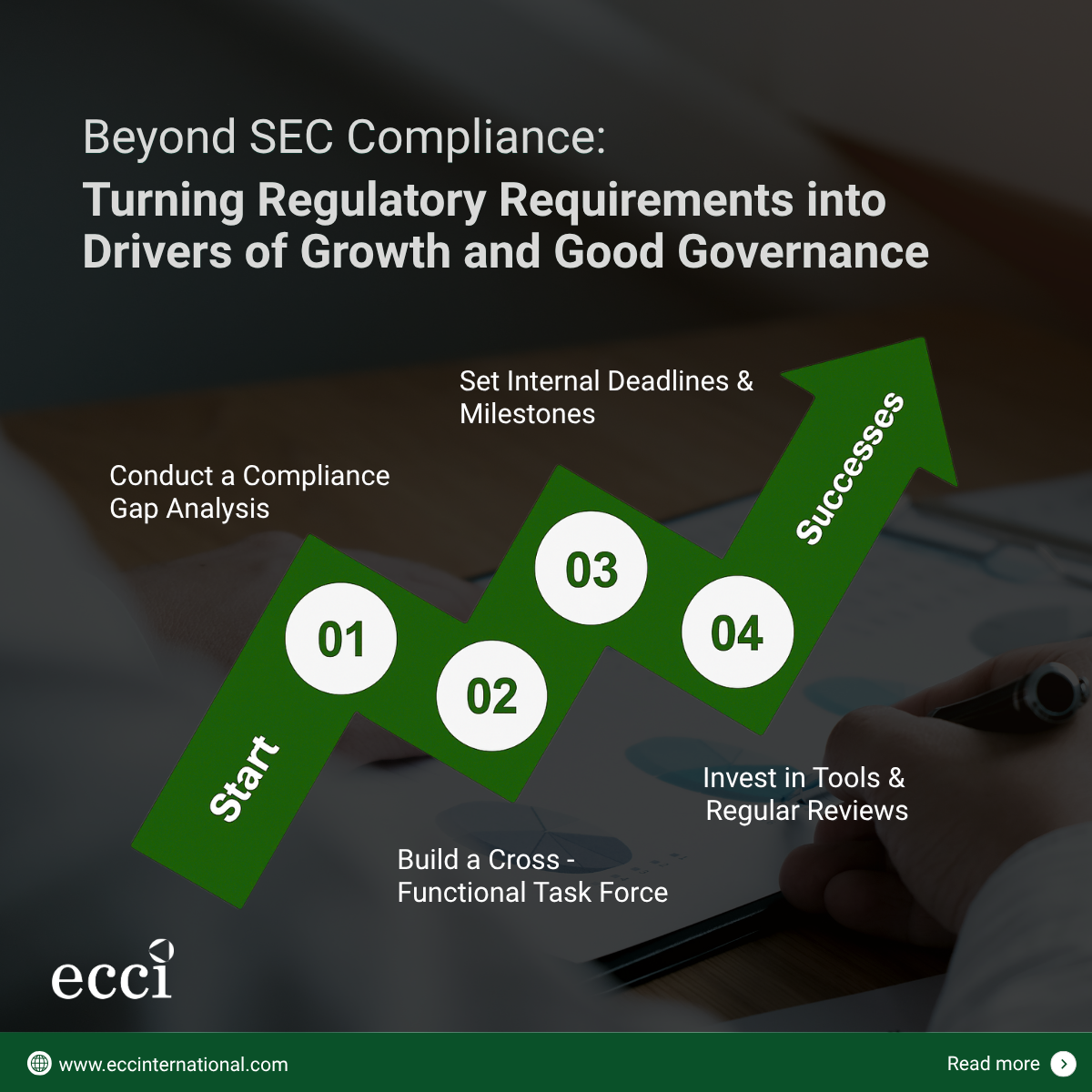
- Conduct a compliance gap analysis: Identify where you are under-reporting, late, weak in governance, lacking ESG metrics.
- Build a cross-functional compliance task force: Legal, finance, sustainability, operations and HR should have roles.
- Set internal deadlines and milestones ahead of official SEC timelines. Don’t wait until the last minute.
- Invest in tools and technology: Whether it’s reporting dashboards, audit tools, data collection systems, or ESG measurement frameworks.
- Review compliance data at the leadership / board level regularly: Use insights for strategy, risk assessment, resource allocation.
How ECCI Helps Companies Build Stronger Sustainability Reports at ECC International (ECCI), we help organizations transform sustainability reporting into a strategic advantage. With 25 years in business, 1000+ customers across 25+ countries, 5+ offices, and a team of 100+ experts, we bring deep experience in aligning disclosures with global standards, ensuring data accuracy, and focusing on what matters most to stakeholders. Our approach builds credibility, strengthens trust, and demonstrates real impact.